Why is building African Heritage brands critical for the future ?
If you’ve been reading us for a while, you must know by now that branding Africa’s heritage isn’t a trend for us at MoonLook.
It’s a path we decided to venture on more than a decade ago to transform culture into real opportunity, dignity and lasting economic impact. Over the past decade, the African creative scene has expanded rapidly, proving what’s possible. And we were always at the forefront cheering for founders and their brand and keeping enthusiast informed.
Today, that momentum demands acceleration to build stronger structures and broader impact.
The continent can no longer remain a footnote
Imagine a design from Senegal sits at Paris Design Week, in a collection drawing gasps from editors who’ve never set foot on Senegalese soil. Its fabrics carry the weight of generations, woven patterns from coastal villages that once supplied royalty. But until recently, those same patterns appeared on fast-fashion racks worldwide, stripped of names, places or people. African cultures have long been raided for inspiration, reduced to exotic accents in someone else’s story.
This isn’t ancient history. Just 15 years ago, global luxury houses routinely lifted motifs from kente cloth, mudcloth or adire dyeing without a nod to their origins. The creators stayed sidelined, their knowledge unvalued.
Branding African heritage shifts that script. It puts the source in control, letting it own the narrative and the profits. When a brand like ghanaian’s AAKS or Nigeria’s I AM ISIGO anchors in its roots, it doesn’t just sell products. It reclaims a voice that travels from local markets to Paris of Copenhagen showrooms.
MoonLook has witnessed this shift firsthand. Through retail, activations, exhibitions, chronicles and partnerships, we have highlighted how rooted brands foster pride. A shea butter formula from Burkina Faso becomes more than skincare; it’s a story of women’s cooperatives sustaining entire communities. This isn’t charity. It’s business with soul, where authenticity drives loyalty in a world tired of sameness.
Each new step or iteration is as proof : this is beyond hype
Rewind to 2015, African creativity was still niche, confined to “black fashion weeks” festivals or boutiques only in black neighbourhoods in the diaspora. In 2017, we took to high street on faubourg Saint-Honoré. Fast forward to now, and the landscape hums with energy. Brands like South Africa’s Maxhosa Africa, with its Xhosa beadwork on global runways, or Ghana’s Christie Brown, blending kente with modern silhouettes, command attention from Vogue to Selfridges. Beauty lines drawing from argan, marula or rooibos oils fill Sephora shelves. Design houses in Burkina Faso or Senegal export furniture that marries ancient carving techniques with clean lines, landing in museum collections.
The numbers back it up. Africa’s creative economy has ballooned, with fashion exports rising over 200% in key markets since 2015. Cities like Lagos, Cape Town and Addis Ababa host weeks that rival New York or London. Collaborations with Chanel or Dior underscore the pull. Yet this growth scratches the surface. The continent holds 54 countries, thousands of crafts and rituals waiting to scale. Acceleration means investment in supply chains, training and storytelling that matches this potential.
MoonLook’s own journey mirrors this rise. From spotlighting 150 brands to advising institutions, we have seen raw talent evolve into global sensation. Partnerships like the one with Kasi Insight show data-driven paths to growth. The lesson? Heritage isn’t a relic. It’s rocket fuel for brands that stand out in crowded markets.
MoonLook’s conviction in action
MoonLook started as a platform to uncover African talent. It grew into a consultancy because one truth emerged: heritage is a brand’s unfair advantage. Work with founders reveals patterns. Those who weave local crafts, stories and values into their core endure. Others fade into trend cycles. Consider the ripple effects. A heritage brand sources dyes from Malian indigo farmers, employs weavers in Ethiopian highlands, and trains marketers in Abidjan. Jobs follow, skills pass down, communities stabilize. This isn’t abstract. In Ghana, basketry cooperatives now export to high-end retailers, lifting households from poverty. Nigerian’s leather goods fuel trade at the global level. Beauty brands using baobab or tamarind create demand that revitalizes rural foraging traditions.
For MoonLook, success means measurable impact: dignified work, preserved know-how, resilient economies. The digital class “Building an African Heritage Brand” equips founders with tools to make this real. From strategy to scaling, it’s about turning passion into infrastructure.
From craft to thriving ecosystem
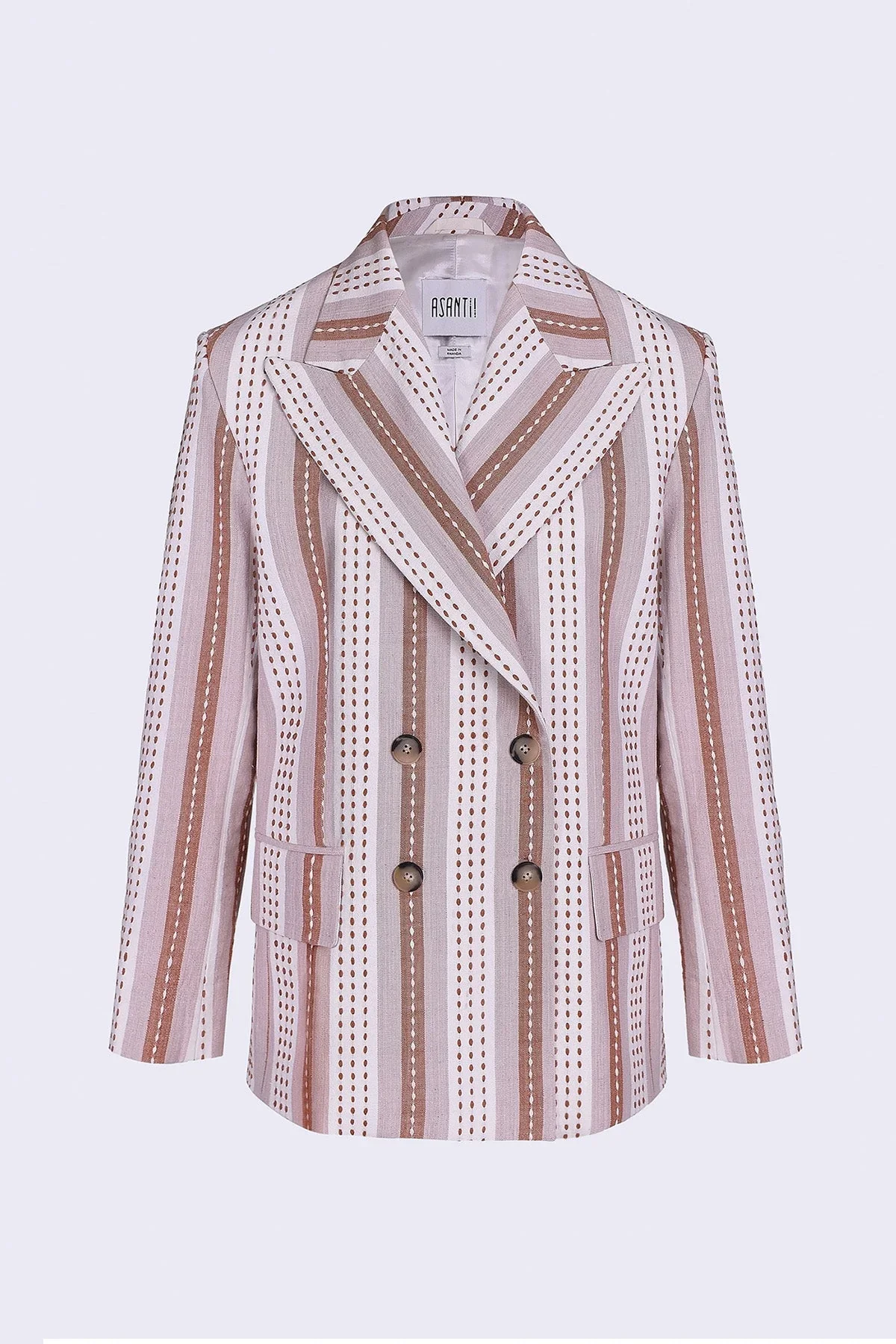
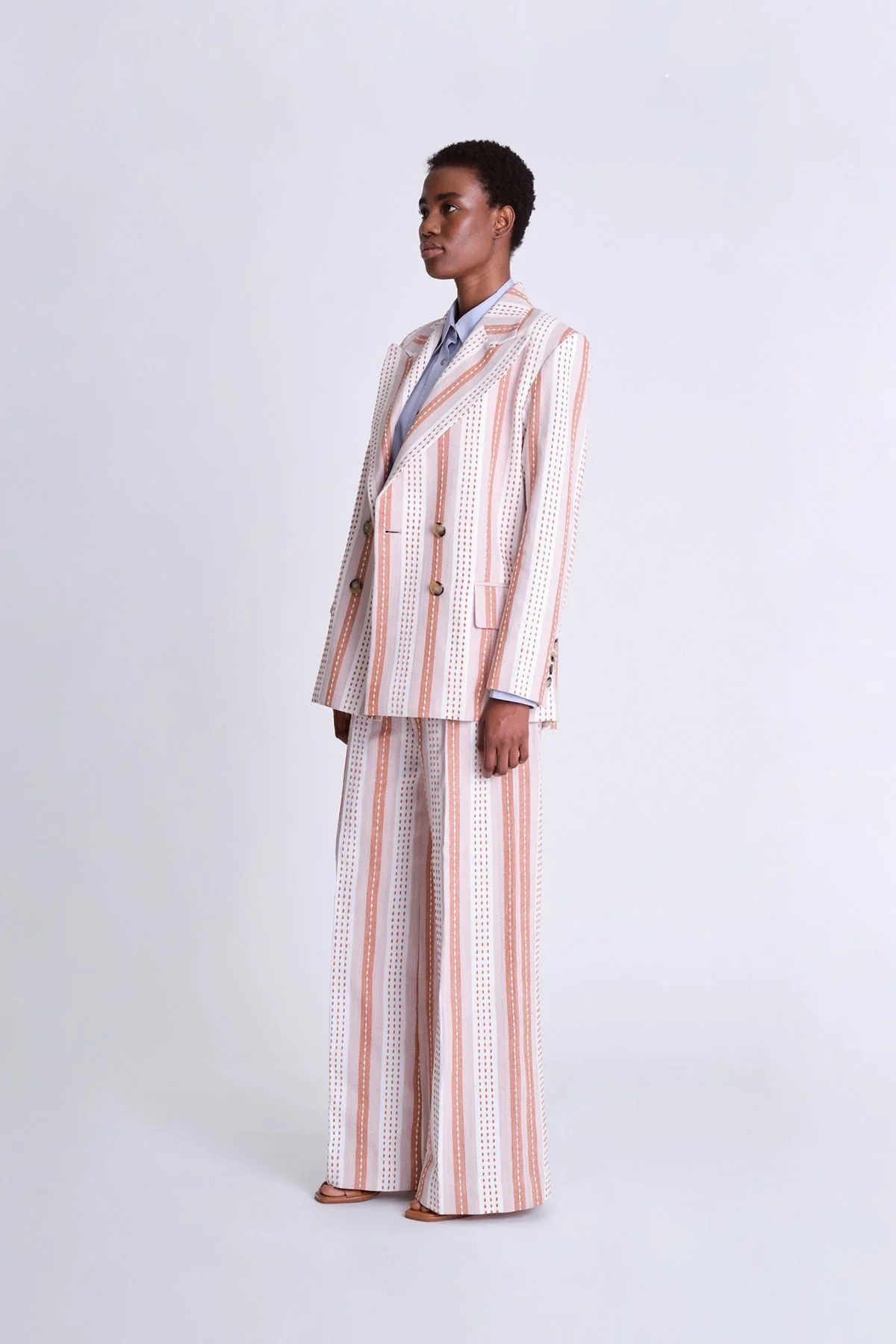
Every Aso-Oke dress, Shea butter cream or iroko chair lies a web of lives. Farmers harvest indigo and cotton. Artisans spun at dawn and weave in the afternoon. Designers sketch, tailor sew. Yet without branding, this web frays. With it, coherence emerges. A single brand can rally suppliers, standardize quality, and pitch to investors as a unified force. Today brands such as This is US or Dye Lab do just that.
Asantii double breasted jacket made for artisanally processed cotton from Burkina Faso.
See below the transformation process
Ghanaian bolgatanga’s weaving into fans of basketry, once tourist trinkets, it’s now a global phenomenon through brands like AAKS. Profits fund education; designs evolve without losing essence. Or Nigeria’s aso-oke weaving, elevated by brands that pair it with streetwear, drawing younger buyers worldwide. These aren’t isolated wins. They model how branding builds value chains that weather economic storms.
As global tastes shift toward meaning, acceleration demands urgency. Consumers crave provenance, not plastic and Africa’s heritage does that, it offers unmatched depth: 3,000 languages, millennia of innovation in textiles, metallurgy, cosmetics and over all unmatched naturals resources. Imagine structure, skills and talents now, and entire sectors rise.
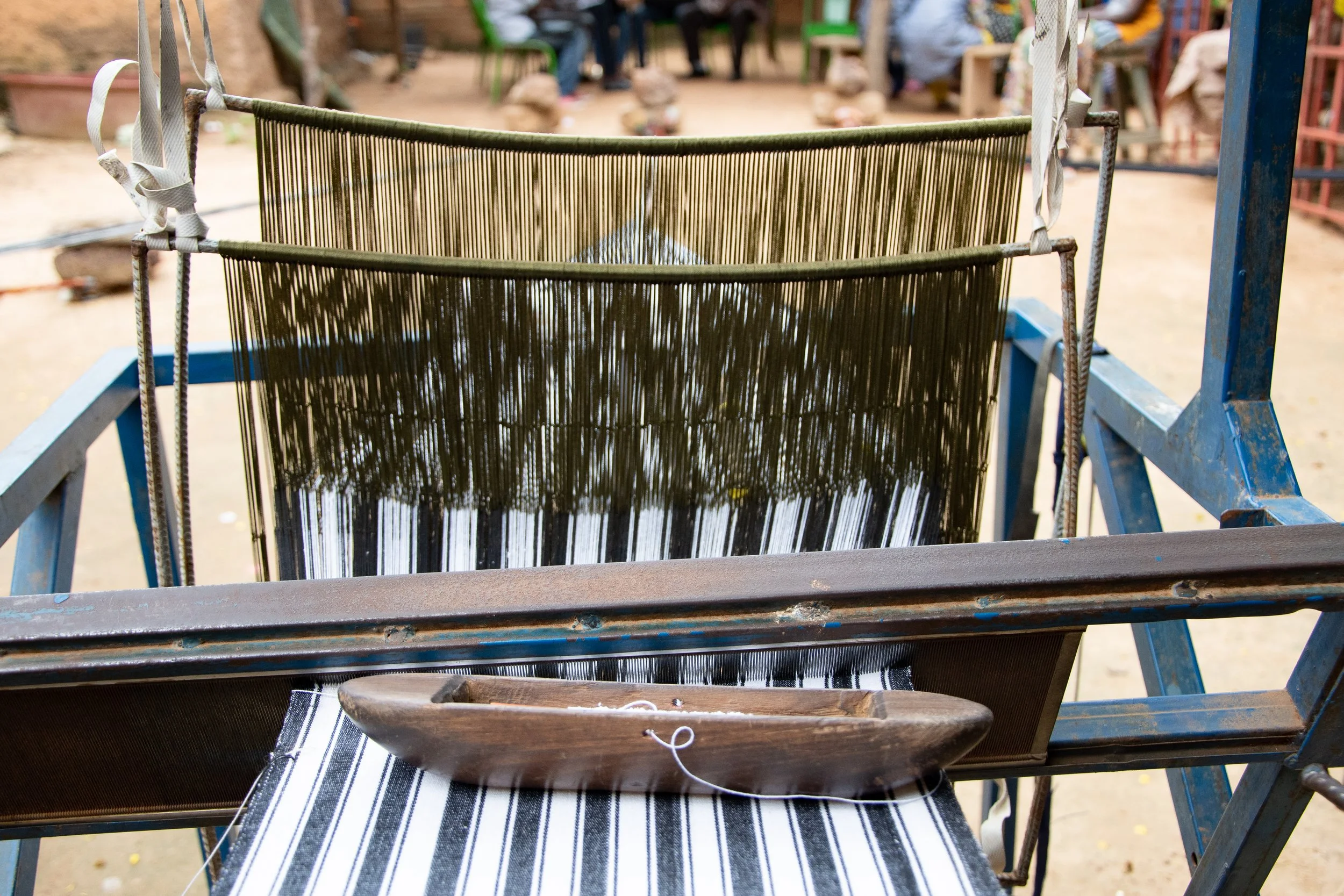
Weaving cotton
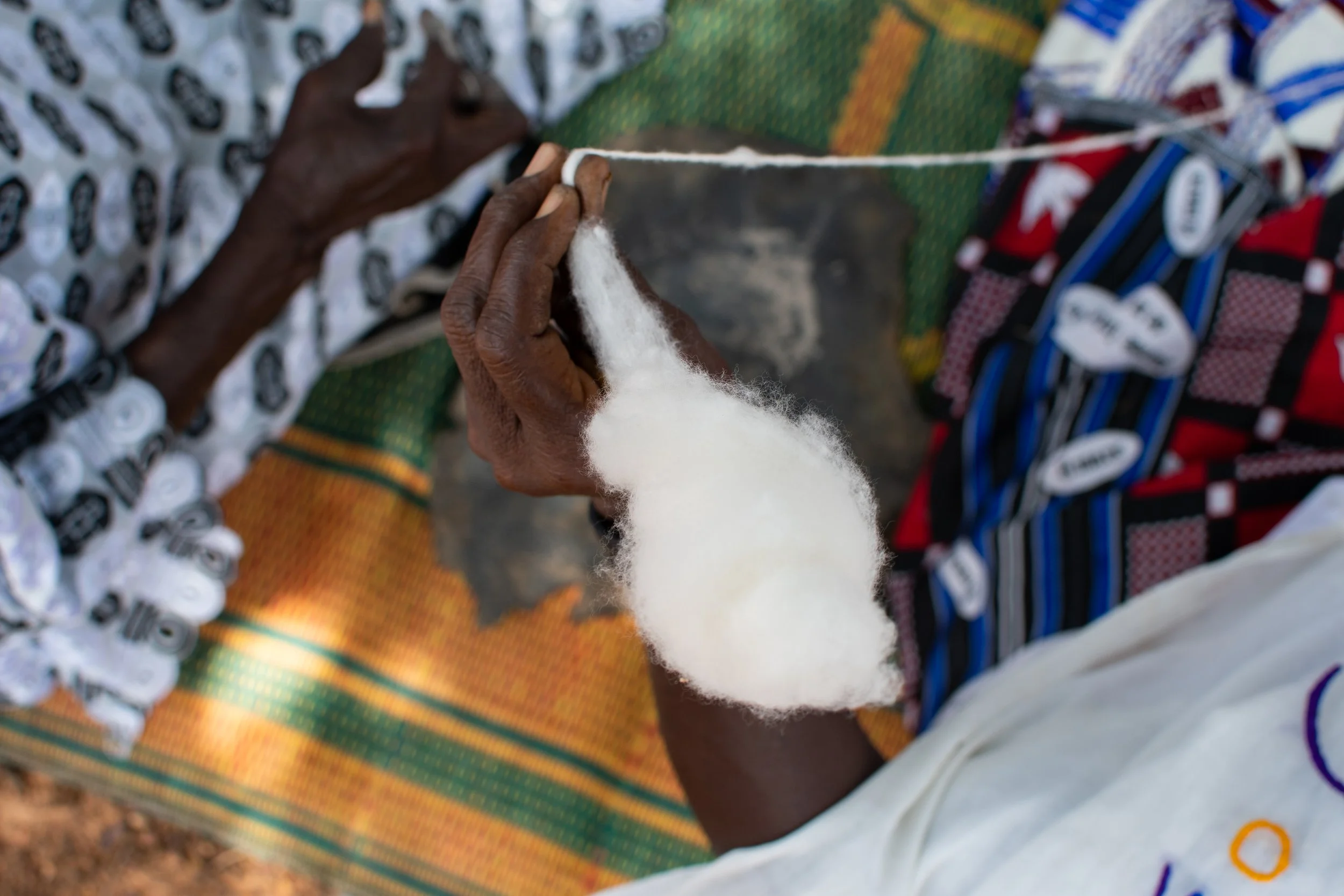
Hand spun cotton
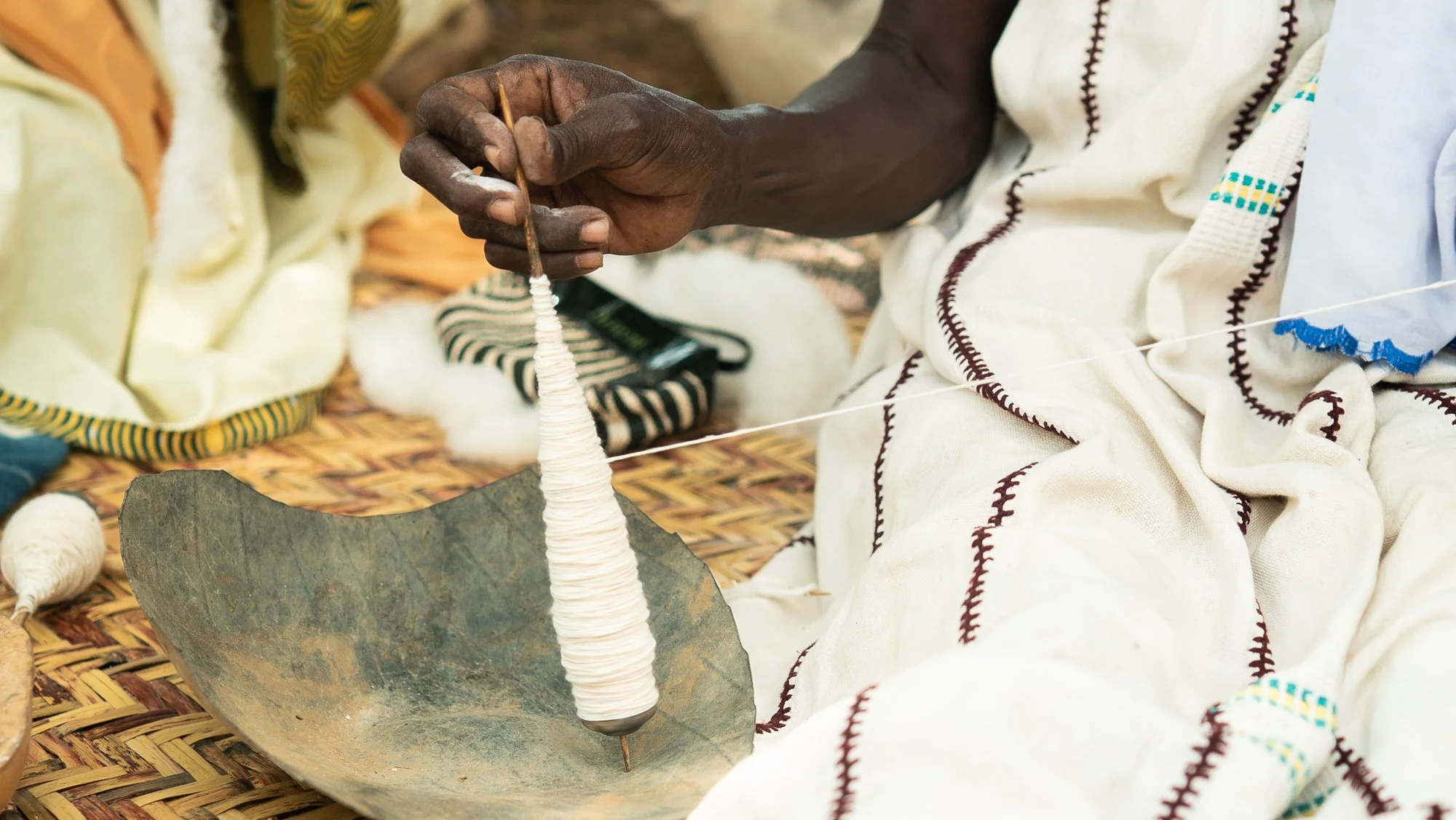
Thread of cotton

Preparation before weaving
The artisanal transformation of cotton in Burkina Faso. © Anne Mimault for Ethical Fashion Initiative
Branding as a excuse to tell stories
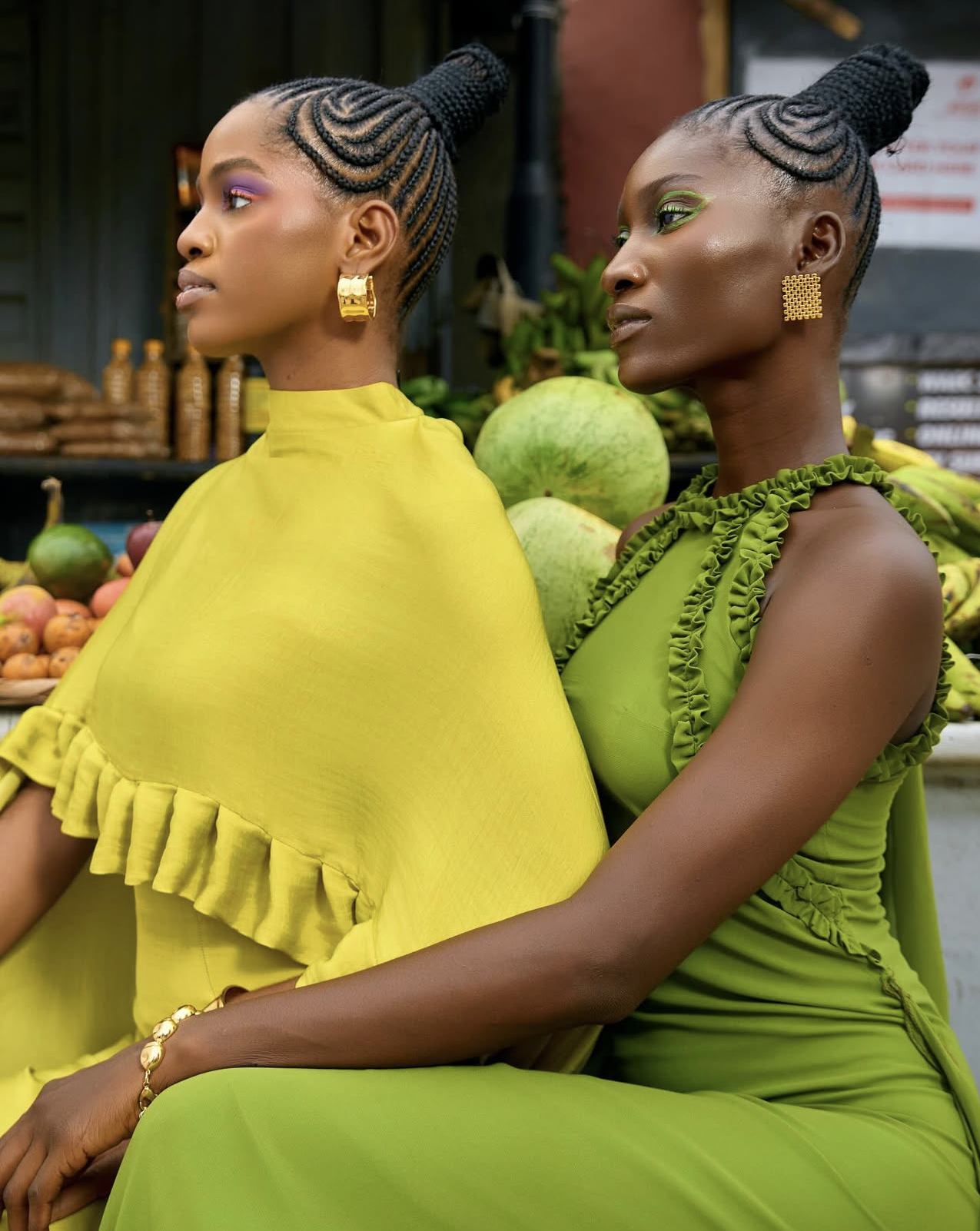
© cover image Jerimiah Ohimai for Illona atelier
Branding’s approach brings places alive through narratives that stick. Start with the soil: a village’s rhythms, a city’s pulse, a ritual’s fire. Build stories linking people, purpose and products. Activate via experiences, from pop-ups to digital reels that pull consumers in.
For African brands, this means ditching generic pitches. Instead: “ Buy this mudcloth sweat of Dogon farmers during harvest”, global consumers are invited to discover the Dogon people their resilience and the great nation of Mansa Musa. We can’t wait to see how Ryan Coogler who created the vibranium and Wakanda will tell the unique story of the richest man who ever lived.
MoonLook applies this to the digital class. Lessons unfold like journeys: discover your roots, craft your tale, scale your world.
Imagine a founder from Cameroon, she revives ndop dyeing, faded for synthetics. Her brand tells of riverside apprenticeships, royal cloths, modern twists. Sales soar; apprentices multiply. That’s the acceleration we chase, not the quick graphic knock-off even from the best as Hermes did for the bamiléké Ndop.
Branding African heritage isn’t optional, it’s the bridge from potential to power and ultimately ownership translated into wealth. MoonLook’s digital programme invites you to cross it, building brands that honor the past while claiming the future.
Join the movement ! Get on the waitlist and enroll to the programme.